The Reference Layer Between the Blockchain and Institutional Books
Published
2026.07.22
PDF Download
Fill in the required information to download the report.
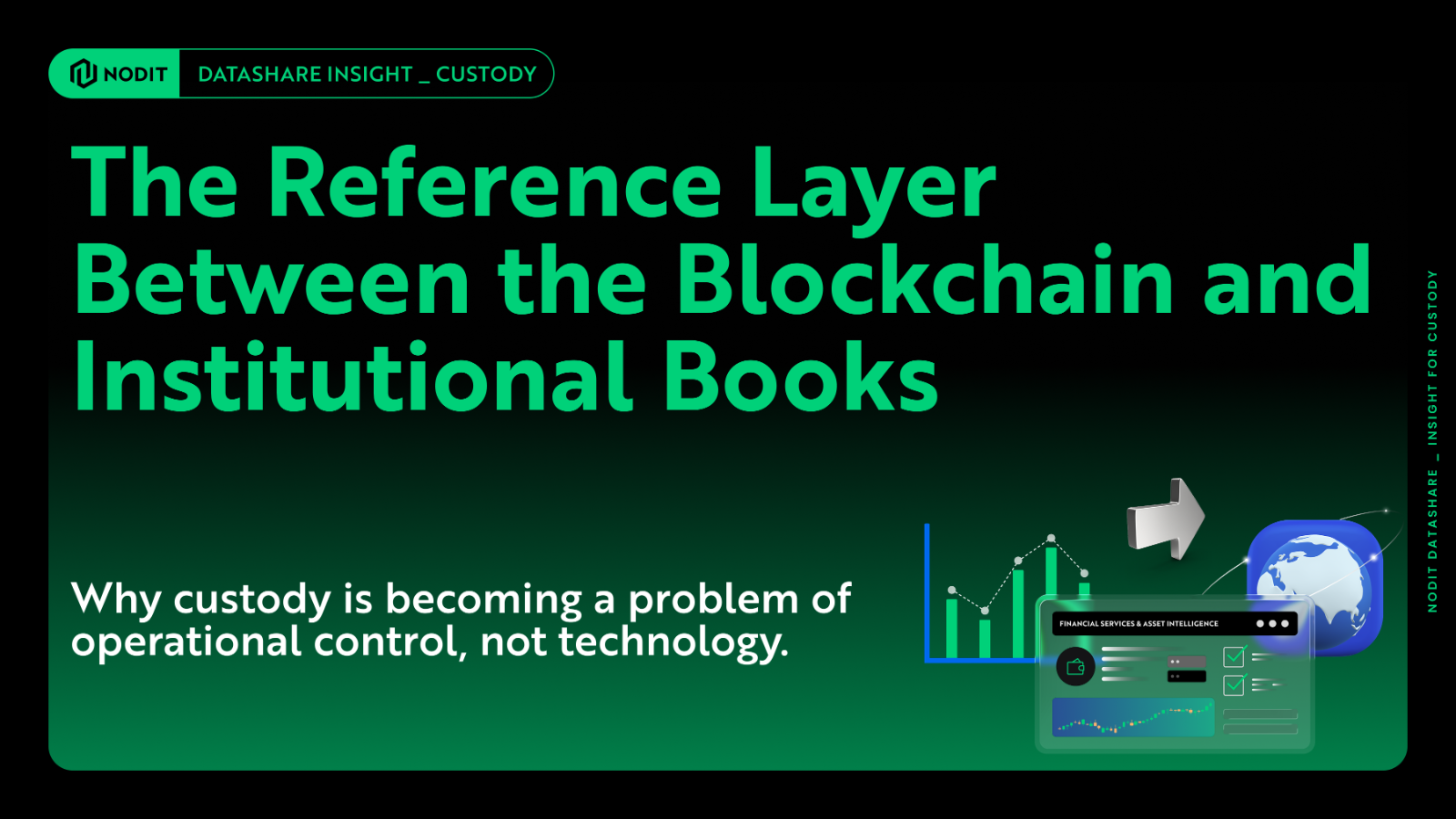
As institutional participation grows, stablecoin payment rails expand, and tokenized assets move into production, the range of assets and networks custodians must handle is increasing fast. The more chains an institution supports, the more the core challenge of custody shifts from safekeeping to operational control.
But for custody operations teams, the critical questions are not about which chains they support. They are about control:
"Do our finance and operations teams reconcile against the same asset balance?"
"Can we reconstruct the asset state as of any audit record date, on demand?"
"Do wallets, accounting, audit, and reporting all see the same number?"
The blockchain provides a single canonical record, but every institution transforms that on-chain state into operational data according to its own systems, policies, and workflows. As a result, the same asset often exists in multiple operational forms across finance, operations, reporting, and audit. Competitive advantage no longer comes from supporting more blockchains alone. It comes from enabling every operational function to work from the same trusted asset reference. This article examines why institutional custody has become a data architecture challenge and why a Reference Data Layer is emerging as a critical foundation for scalable operations.
TL;DR:
The focus of custody is shifting from safekeeping assets to reliably operating them.
When the same asset is managed on a different basis in each system, operational complexity grows.
A Reference Data Layer is a validated blockchain data foundation that an institution's systems can treat as one common reference, so the whole organization works from the same data.
Nodit DataShare delivers blockchain data institutions can trust into their operating environment.
![[Presentation Deck] CLAIR: From Traditional Compliance to AI-Powered Operations](https://cms-files.lambda256.io/contents/01M0ES2EVY18X0H05JBEKJJHES/a209ffa2-8040-4dd6-bd8a-3da7b2012891.png)